BLOGGER TEMPLATES - TWITTER BACKGROUNDS »

Sunday, July 19, 2009

Nova

Friday, July 17, 2009

Music a 'mega-vitamin' for the brain


LONDON, England (CNN) -- When Nina Temple was diagnosed with Parkinson's disease in 2000, then aged 44, she quickly became depressed, barely venturing out of her house as she struggled to come to terms with living with the chronic condition. "I was thinking of all the things which I wished I'd done with my life and I wouldn't be able to do. And then I started thinking about all the things that I still actually could do and singing was one of those," Temple told CNN.

Along with a fellow Parkinson's sufferer, Temple decided, on a whim, to form a choir. The pair placed notices in doctor's surgeries inviting others to join them and advertised for a singing teacher.

By 2003, with the help of funding from the Parkinson's Disease Society, the resulting ensemble "Sing For Joy" was up and running, rehearsing weekly and soon graduating to public performances.

The group now consists of around two dozen singers, including sufferers of Parkinson's and multiple sclerosis, others recovering from conditions including stroke or cancer, plus their carers, family and friends. Led by acclaimed jazz performer Carol Grimes, the group's genre-defying repertoire ranges from Cole Porter classics to ethnic punk. Video Watch Sing for Joy perform Next....

Friends promote debut novel of writer who has post-stroke aphasia

When Owen, Frank, Audrey, and Jin-Ae meet online after each attempts suicide and fails, the four teens mak e a deadly pact: they will escape together on a summer road trip to visit the sites of celebrity suicides...and at their final destination, they will all end their lives. As they drive cross-country, bonding over their dark impulses, sharing their deepest secrets and desires, living it up, hooking up, and becoming true friends, each must decide whether life is worth living--or if there's no turning back.
Greg sez, "Albert Borris' debut novel, a YA book called Crash Into Me, comes out today... but back in December, Albert suffered a massive stroke that left him unable to get words out on paper or verbally in the proper order. He's a writer unable to write... and currently unable to help promote his own book. Fellow young adult and middle grade debut authors in the Class of 2K9 of which Albert had been co-president, are working together along with others to help spread the word so that Albert's novel gets the attention it deserves... and which he is unable to help generate." Next...

Lost in the Cosmos


Night Sky, a new off-Broadway play, concerns a world renowned astronomer named Anna who suffers an injury to her brain during a car accident and loses her abilities of language and communication – a condition known as aphasia. I was recently invited by the play’s producer to see its final rehearsal at Baruch City College in midtown Manhattan.

I arrived at the practice space, a small classroom three stories below ground in the bowels of the city college, rather early and was asked to wait outside in the hallway until the players were ready. Sitting down in a chair, I began to converse with several big men in tuxedos, sweaty in the Next...

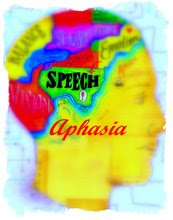
Aphasia

A condition, caused by neurological damage or disease, in which a person’s previous capacity to understand or express language is impaired. The ability to speak, listen, read, or write may be affected
depending on the type of aphasia involved. Next...

Tuesday, April 28, 2009

Spain Celebrates Stroke Awareness


PDF Print E-mail
Written by Heidi Wardman
Friday, 24 April 2009

stroke497l.jpg

Spain will recognize Stroke Awareness Day for the first time this year, thanks to the efforts of the Torrevieja Stroke Support Group, founded by Costa Blanca resident Louie Killeen during January 2007, shortly after her husband suffered a stroke, which immediately turned her life upside down.
Louie made it her mission to establish a support network and the Torrevieja Stroke Support Group has gone from strength to strength, now providing a professional therapy and rehabilitation programme to stroke survivors and their loved ones located throughout the area. Its success has seen it relocating to a fully equipped, spacious centre, located in the Annex to the rear of the Age Concern building in Urbanization La Siesta, where the group convenes every third Friday, whilst additional Speech Therapy and Social group sessions are held in the interim.


Sessions are structured to include a welcome friendship circle and separate therapy groups, according to individual need, with access to the expertise of a fully qualified team, including two Primary Care Nurses, one of whom was commissioned to establish a Stroke Support Centre in the UK, an Occupational Therapist and Group Councillor.

SYMPTOMS
The Torrevieja Stroke Support Group’s most recent challenge is in promoting the FAST initiative to both international and Spanish communities, to enable people to identify the critical signs and symptoms of an attack. Over 150,000 people in the UK suffer from stroke, a sudden attack on the brain when the blood supply is disrupted, every year. The long-term result and severity of symptoms varies in accordance with which part of the brain has suffered the attack, although there are a number of common signs which reveal themselves when stroke hits, which the UK Stroke Association has identified in its FAST initiative.

FAST
The Face Arm Speech Test (FAST) is the procedure applied by Paramedics when they are called to a potential stroke situation. FAST examines three specific symptoms: Facial weakness - can the person smile? Has their mouth or eye drooped? Arm weakness - can the person raise both arms? Speech problems - can the person speak clearly and understand what you say? If any or a combination of these symptoms present themselves, then this is where the ‘T’ comes into play- Time to call 112. Delay can result in death or major long-term disabilities, such as paralysis, severe memory loss and communication problems (aphasia).

ADVICE

The FAST initiative will be among items on the agenda on Stroke Awareness Day, celebrated annually on 12th May in countries throughout Europe. The Torrevieja Stroke Support Group is pleased to announce that the anniversary will also be acknowledged in Spain for the first time in 2009. The group has been supplied with a wealth of materials from the Stroke Association printed in English, whilst Public Relations Officer, Anna Blaun of ‘Clinica Centro’ in Torrevieja has devised an alternative slogan and had materials translated for the benefit of the Spanish audience. The Clinic’s Director, Julio Monje, revealed that it receives many stroke survivors through its doors, many of whom he feels may have responded more positively to rehabilitation had they or loved ones responded swiftly to the symptoms. He said, “The clinic is delighted to work alongside the Stroke Support Group during this project, which we hope will be the first of many.”


Subject to approval from the Town Hall, representatives from the two parties are hoping to distribute the materials in the Plaza de la Constitución, Torrevieja, on Stroke Awareness Day, and will be on-hand throughout the morning to answer any questions which residents may have in relation to the issues raised.
For further details please email strokesupportgroup@hotmail.com.

Monday, April 27, 2009

PIRACETAM, OTC drug


  • Piracetam ; i looked into this drug and tried it out, it did increase all of the stated benefits, so i thought i would share. Google the name for personal research and companies that sell by mail.* Piracetam (brand name: Nootropil, Qropi, Myocalm, Dinagen, Synaptine) is a nootropic. It is a dietary supplement which is claimed to enhance
  • cognition and memory, slow down brain aging, increase blood flow and oxygen to the brain, aid stroke recovery, and improve Alzheimer's, Down syndrome, dementia, and dyslexia, among others._ _Piracetam's chemical name is 2-oxo-1-pyrrolidine acetamide; it shares the same 2-oxo-pyrrolidone base structure with 2-oxo-pyrrolidine carboxylic acid (pyroglutamate). Piracetam is a cyclic derivative of GABA. It is one of the racetams. Piracetam is prescribed by doctors for some conditions, mainly myoclonus,but is used off-label for a much wider range of applications. However, some treat it as a food supplement rather than a drug Piracetam (brand name: Nootropil, Qropi, Myocalm, Dinagen, Synaptine) is a nootropic. It is a dietary supplement which is claimed to enhance cognition and memory, slow down brain aging, increase blood flow and oxygen to the brain, aid stroke recovery, and improve Alzheimer's, Down syndrome, dementia, and dyslexia, among others.Piracetam's chemical name is 2-oxo-1-pyrrolidine acetamide; it shares the same 2-oxo-pyrrolidone base structure with 2-oxo-pyrrolidine carboxylic acid (pyroglutamate). Piracetam is a cyclic derivative of GABA. It is one of the racetams. Piracetam is prescribed by doctors for some conditions, mainly myoclonus,but is used off-label for a much wider range of applications. However, some treat it as a food supplement rather than a drug Piracetam was first synthesized in 1964 by scientists at the Belgian pharmaceutical company UCB led by Dr Corneliu E. Giurgea. The drug was the first of the so-called +nootropics+ ("smart drugs" or "cognitive enhancers"), that is, substances which purportedly enhance mental performance. The term nootropic was coined by Giurgea. Nootropil was launched clinically by UCB in the early 1970s and remains an important product of that company in Europe. Piracetam is primarily used in Europe, Asia, South America and the US. Piracetam is legal to import into the United Kingdom and the United States for personal use with or without prescription. As of June 2006, piracetam is sold in the United States as a dietary supplement. It has become popular as a cognitive enhancement drug among students, who often buy it in bulk as a powder and then consume it with orange or grapefruit juice to mask the strong, bitter taste. A two week regimen of piracetam was found to enhance verbal memory in healthy college students in a double-blind, placebo-controlled study.It is used by parents as a treatment for childhood autism, though no study has yet produced results which would support such a use. A couple of vendors offering Piracetam in pill form in the USA include American Nutrition (AmericanNutrition.com) and Cognitive Nutrition (CognitiveNutrition.com). Aging Piracetam appears to reverse the effects of aging in the brains of mice. Piracetam appears to reduce levels of lipofuscin in the rat brain.(Lipofuscin accumulation is a common symptom of aging and alcoholism). Alcoholism Piracetam appears to be effective in treating alcoholism or its symptoms. Alzheimer's and senile dementia Piracetam appears to be effective for improving cognition in Alzheimer's disease and senile dementia patients Stroke, ischemia and symptoms Piracetam has been found to improve cognition after stroke, and reduce symptoms, such as aphasia.It also improves cognition in cases of chronic ischemia. Dyspraxia and Dysgraphia Due to its supposed effect on nerves and muscles it is sometimes prescribed as an aid to muscle or dexterity training, particularly in cases of dysgraphia and dyspraxia. There has not been a specific study as to whether it is beneficial in this aspect. Vinpocetine, another purported nootropic with which piracetam is indirectly synergesic, is confirmed to help with these conditions to a certain degree. Schizophrenia Piracetam improves cognitive performance of schizophrenics as it does with non-schizophrenics, but does not improve or worsen the chronic schizophrenia disease state. Brand names Nootropil, Qropi, Myocalm, Dinagen, Oikamid, Synaptine Due to the effect of piracetam on platelet aggregation, caution is recommended in patients with underlying disorders of hemostasis, major surgery or severe hemorrhage. Abrupt discontinuation of treatment should be avoided as this may induce myoclonic or generalised seizures in some myoclonic patients. As piracetam is almost exclusively excreted by the kidneys caution should be exercised in treating patients with known renal impairment. In renally impaired and elderly patients, an increase in terminal half-life is directly related to renal function as measured by creatinine clearance. Dosage adjustment is therefore required in those with mild to moderate renal impairment and elderly patients with diminished renal function.